
Why Lid Architecture Dictates Packaging Performance
In modern retail packaging, the structural design of a custom metal tin does far more than enclose a product—it dictates shelf-life, barrier protection, sensory freshness, and end-user convenience. For food manufacturers, tea blenderies, confectioners, and luxury gift brands, selecting the wrong lid closure can result in stale contents, flavor loss, or compromised brand reputation.
The functional core of custom metal packaging lies in its tin box lid sealing logic. Each primary lid style—Plug Lids, Slip Lids, Hinged Lids, and Easy-Open Ends (EOE)—utilizes a distinct mechanical interface to balance airtight integrity against ease of opening.
Understanding the engineering mechanics behind these four lid configurations enables procurement managers to align structural performance directly with product preservation requirements.
1. Technical Breakdown of the 4 Primary Tin Lid Structures
1. Plug Lid (Airtight Friction Fit):
   [ Over-Cap / Recessed Ring ] ──(Radial Friction)──► [ Inner Collar / Neck ]  ==> High Barrier
2. Slip Lid (Stackable Over-Cap):
   [ Outer Lid Skirt ] ──(Telescopic Fit)──► [ Outer Body Wall ]              ==> Medium Barrier
3. Hinged Lid (Articulated Closure):
   [ Pin / Wire Hinge Assembly ] ──(Rotational Pivot)──► [ Body Rolled Edge ] ==> Convenience / Form
4. Easy-Open End (Hermetic Seam):
   [ Score Line Aluminum Foil ] ──(Double-Seamed Rim)──► [ Tinplate Body ]     ==> 100% Hermetic Barrier
1. Plug Lids (Internal Collar Recessed Fit)
Plug lids feature a stepped inner collar or recessed metal ring that presses tightly inside the tin neck opening.
- Sealing Mechanism: Creates a continuous radial friction surface along the interior rim. This close-tolerance metal-to-metal contact significantly restricts airflow and moisture ingress.
- Optimal Applications: Premium specialty teas, roasted coffee beans, fine powders, and luxury dry edibles requiring high moisture barriers and freshness retention.
2. Slip Lids (Telescopic Over-Cap Fit)
Slip lids slide vertically over the outside body of the tin. They are designed with a slightly larger diameter than the tin body to allow smooth manual opening and reclosure.
- Sealing Mechanism: Relies on an overlapping telescopic wall. While not completely hermetic on its own, adding an internal food-grade liner or secondary foil membrane delivers excellent everyday freshness.
- Optimal Applications: Confectionery, mints, biscuits, loose-leaf herbal teas, and retail gift items where frequent opening and easy stacking are essential.
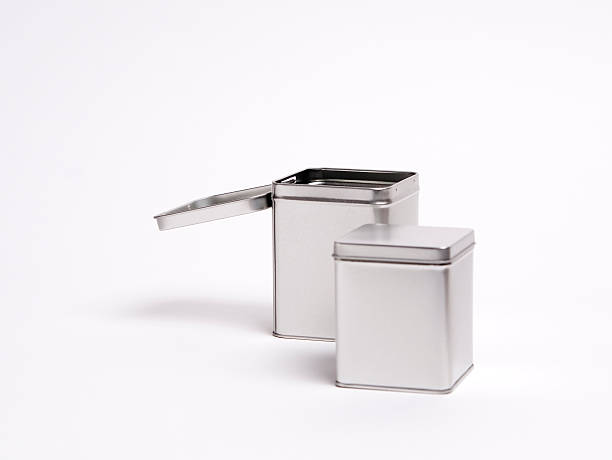
3. Hinged Lids (Mechanical Pivot Closure)
Hinged lids permanently attach the cover to the tin body using wire loops, formed metal tabs, or integrated mechanical hinge pins.
- Sealing Mechanism: Rotates on a fixed pivot. To maintain a uniform seal across the curling edge, the hinge assembly must incorporate controlled mechanical clearance (“free play”). This allows the lid to seat flat against the rolled body rim without warping the seal line.
- Optimal Applications: Mints, tobacco products, stationery sets, first-aid kits, and luxury gift packaging where lid retention prevents component loss.
4. Easy-Open Ends (Peelable Foil / Pull-Tab Hermetic Seam)
Easy-Open Ends (EOE) feature a scored aluminum foil or pull-tab membrane double-seamed directly onto the metal tin rim at the factory.
- Sealing Mechanism: Provides a $100\%$ hermetic barrier against air, humidity, and gas exchange until pulled by the consumer.
- Optimal Applications: Single-use sealed food packaging, milk powders, premium nut mixes, and products requiring extended ambient shelf-life prior to first opening.
2. Technical Comparison Matrix: Selecting the Right Lid Mechanism
The matrix below maps structural lid parameters against key packaging performance metrics to guide your custom tin sourcing decisions.
| Lid Structural Style | Airtight & Moisture Barrier Rating | Reclosure Capability | Stackability & Display Appeal | Primary Mechanical Advantage |
| Plug Lid | High to Excellent | Excellent (Repeated friction fit) | High (Flush top surface profiles) | Superior internal friction seal without external bulk |
| Slip Lid | Moderate (High with inner liner) | Excellent (Smooth slide interaction) | Maximum (Flat top & bottom nesting) | Low unit cost, high operational assembly speed |
| Hinged Lid | Moderate | Excellent (One-handed opening) | High (Integrated seamless look) | Zero lid loss; convenient single-piece construction |
| Easy-Open End | $100\%$ Hermetic (Pre-Opening) | Requires secondary plastic snap cap | Moderate to High | True vacuum/gas-flush sealing for perishable goods |
3. Technical Q&A: Barrier Integrity, Hinge Mechanics, and Reusability
Q: Which Tin Box Lid Style Provides the Best Overall Sealing Performance?
For pre-opened, long-term shelf storage, the Easy-Open End (EOE) provides absolute $100\%$ hermetic isolation.
However, among traditional reusable metal closures, the Plug Lid delivers the highest barrier performance. By driving a recessed collar into the neck of the tinplate body, the contact area along the rim creates a tight friction seal. When paired with an internal silicone ring or secondary gasket, plug lids effectively block ambient moisture and oxygen, keeping sensitive food products crisp and fresh.
Q: Do Hinged Lids Become Loose or Warped Over Time, Spoiling the Seal?
Not when engineered with precise mechanical hinge tolerance.
Historically, simple folded-metal hinges could misalign after repeated flexing, leaving gaps along the front edge opposite the hinge. Modern custom tin box manufacturing solves this by engineering calibrated “free movement clearance” into the hinge pin or tab geometry.
This allowance lets the lid drop flat onto the entire perimeter curl before latching, ensuring even contact pressure across the sealing edge and preventing gap formation over extended use.
[Proper Hinge Engineering: Mechanical Clearance Principle]

  Incorrect (Rigid Pivot)         Correct (Calibrated Clearance)
   Lid tilts; gap at front         Lid drops flat across full rim
    ┌─────────────┐                 ┌─────────────┐
   /               \               │             │
  o═════════════════             o═══\═══════════/═══
  (Hinge)   (Front Gap)          (Hinge)  (Even Contact Seal)
Q: Can an Easy-Open End Be Resealed After the Aluminum Foil Is Peeled Off?
No, the foil membrane itself cannot be re-sealed once torn.
To solve this, commercial easy-open tin designs utilize a hybrid closure system: a double-seamed aluminum peelable membrane creates a true hermetic seal for shipping and long-term retail display, paired with an over-fitted Slip Lid or plastic snap cap. Once the end-user peels off the foil layer, the outer secondary lid serves as an effective re-closure cap for daily use.
Technical Knowledge Summary
Selecting the ideal lid closure for custom tin box packaging requires balancing product barrier requirements against consumer usability. Plug Lids deliver superior friction-fit seals ideal for moisture-sensitive dry foods and teas. Slip Lids provide cost-effective, stackable versatility for high-turnover consumer goods. Hinged Lids offer one-handed convenience and zero-loss lid retention when constructed with proper mechanical clearance. Finally, Easy-Open Ends paired with secondary over-caps provide the ultimate combination of zero-leakage factory sealing and long-term consumer reusability.
Optimize Your Custom Metal Packaging
Planning a custom metal tin rollout or searching for airtight packaging solutions for your product line? Contact our packaging engineering team to request structural samples, dimensional CAD templates, and competitive custom manufacturing quotes.