
Fragrance brands need packaging that protects product quality while creating a memorable customer experience. Custom aromatherapy tins offer a compact metal packaging solution for solid perfumes, aromatherapy balms, scented wax tablets, and other portable fragrance products. However, essential oils and fragrance compounds can interact with certain coatings and sealing materials. Poor compatibility may cause coating deterioration, while inadequate sealing can accelerate fragrance loss.
For B2B buyers, choosing the right aromatherapy metal containers involves more than selecting a size or printing a logo. Brands should evaluate internal coating compatibility, lid construction, sealing performance, and surface finishes. This guide explains the key considerations when sourcing custom tin containers for aromatherapy and fragrance product lines.
1. The Growing Demand for Portable Metal Aromatherapy Packaging
Portable fragrance products have created new packaging opportunities for personal care and lifestyle brands. Solid perfumes, aromatherapy balms, and scented wax products offer convenient alternatives to traditional liquid fragrances.
Metal tins support these product formats through compact dimensions, lightweight construction, and customizable exterior designs.
1.1 Why Fragrance Brands Choose Metal Packaging
Metal packaging offers several practical advantages for portable aromatherapy products.
- Compact storage: Small tins fit easily into handbags, travel kits, and retail gift sets.
- Durable structure: Properly manufactured metal containers resist everyday handling and maintain their shape.
- Custom branding: Printing, embossing, and decorative finishes support distinctive brand identities.
- Reusable packaging: Customers may reuse suitable tins for small accessories or personal storage.
- Flexible product formats: Different tin shapes and capacities accommodate balms, wax tablets, and solid fragrances.
However, metal packaging alone does not guarantee fragrance protection. The internal coating, lid design, and contact materials must match the product formulation.
1.2 Common Aromatherapy Products Suitable for Custom Tins
Different fragrance products require different packaging considerations.
| Product Type | Typical Packaging Requirement | Key Consideration |
|---|---|---|
| Solid perfume | Small, portable tin | Fragrance compatibility and secure closure |
| Aromatherapy balm | Shallow or compact tin | Coating resistance and easy access |
| Scented wax tablets | Shallow metal container | Surface protection and product separation |
| Essential oil balm | Screw-top tin | Formulation compatibility and sealing |
| Solid fragrance sticks | Compact custom container | Shape, capacity, and convenient opening |
The final container specification should reflect the product’s ingredients, filling temperature, storage conditions, and expected shelf life.
1.3 How to Select the Right Tin Size and Shape
Packaging dimensions influence both product usability and retail presentation.
Round tins remain popular for balms and solid perfumes. Their simple shape supports convenient filling and label placement.
Rectangular tins can create a more distinctive appearance. They also work well for gift sets and coordinated fragrance collections.
Before selecting dimensions, buyers should confirm:
- Net product weight and filling volume.
- Product thickness and required headspace.
- Application method and finger accessibility.
- Lid clearance and closure structure.
- Retail display and shipping requirements.
A sample filled with the actual formulation provides a more reliable assessment than an empty container.
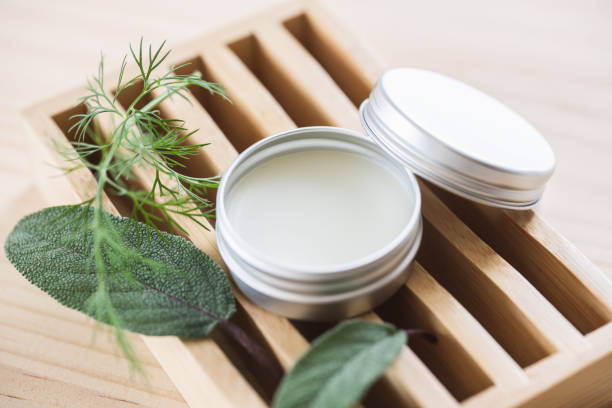
2. Essential Oil Compatibility: Chemical-Resistant Internal Linings
Internal coating compatibility is one of the most important considerations when purchasing custom aromatherapy tins.
Essential oils contain different aromatic compounds. Some fragrance ingredients and carrier solvents may interact with certain coating systems. This interaction can affect coating adhesion, appearance, or protective performance.
Therefore, fragrance brands should evaluate the complete product formulation before approving a metal tin.
2.1 Why Internal Coatings Matter for Aromatherapy Tins
Many metal containers use an internal coating to separate the contents from the metal substrate.
This coating may help reduce direct contact between the formulation and the container surface. However, its suitability depends on the coating chemistry and the ingredients inside the tin.
Potential compatibility issues include:
- Coating softening after prolonged contact.
- Discoloration or changes in surface appearance.
- Swelling, blistering, or loss of adhesion.
- Unexpected odor transfer or fragrance changes.
- Corrosion where the protective layer becomes damaged.
These issues do not occur with every essential oil or coating. Actual performance depends on formulation concentration, exposure time, temperature, and storage conditions.
2.2 How to Evaluate Chemical Compatibility
A suitable internal coating should be selected through product-specific compatibility testing.
Fragrance brands should provide their tin supplier with relevant formulation information, including:
- Essential oil and fragrance ingredient types.
- Carrier oils and solvent components.
- Approximate ingredient concentrations.
- Product pH, where applicable.
- Filling temperature and storage conditions.
- Expected contact duration and shelf life.
The supplier can then help identify appropriate coating options for sample evaluation.
2.3 Recommended Compatibility and Adhesion Tests
A structured testing process helps identify potential problems before mass production.
| Test | What It Evaluates | Why It Matters |
|---|---|---|
| Formulation contact test | Coating appearance after contact | Identifies softening or discoloration |
| Adhesion test | Coating bonding to the metal | Detects peeling or adhesion loss |
| Swelling observation | Changes in coating condition | Identifies possible material incompatibility |
| Corrosion inspection | Metal surface condition | Checks whether protective performance remains acceptable |
| Odor assessment | Changes in product or packaging odor | Identifies possible odor transfer |
| Storage stability test | Performance over time | Evaluates packaging under intended storage conditions |
Testing conditions should reflect the actual formulation and intended market requirements.
For example, a concentrated essential oil balm may require a different evaluation from a wax-based solid perfume.
Brands should also distinguish between short-term screening and long-term shelf-life validation. Passing a brief contact test does not automatically establish long-term compatibility.
2.4 What Buyers Should Confirm Before Bulk Production
Before approving custom essential oil tins, buyers should request clear information about the proposed internal coating.
Confirm the following points:
- Is the coating suitable for the specific fragrance formulation?
- Has the coating been tested against the actual product?
- Does the coating maintain adhesion after exposure?
- Are there any odor, color, or surface changes?
- Can the supplier provide relevant material documentation?
- Has the finished container passed the agreed sample evaluation?
The most reliable approach is to test the actual formulation inside the finished tin. This process evaluates the combined performance of the metal body, coating, and closure.
3. Airtight Sealing Mechanics: Threaded Screw Tops and Gasket Solutions
Fragrance preservation depends on more than the metal body. The lid and sealing interface also influence how well a container protects its contents.
Poor closure performance may allow volatile fragrance compounds to escape. It can also increase the risk of leakage or contamination during transportation.
For this reason, buyers should evaluate the complete closure system when sourcing custom aromatherapy tins.
3.1 Threaded Screw Tops for Secure Closure
Threaded screw tops provide a practical closure option for portable fragrance packaging.
The lid engages with the threaded section of the container. This structure allows users to open and close the tin repeatedly.
Potential advantages include:
- Convenient repeated access.
- A secure mechanical connection.
- Reduced risk of accidental lid removal.
- Compatibility with selected gasket or liner designs.
- A clean appearance for premium fragrance products.
However, a threaded lid does not automatically create an airtight seal. Performance depends on thread precision, contact surfaces, lid fit, and the presence of a suitable sealing element.
3.2 Rubber and PE Gaskets for Improved Sealing
A gasket or liner can improve contact between the lid and container body.
Different materials offer different properties. The correct choice depends on fragrance ingredients, temperature, and required sealing performance.
| Sealing Material | Potential Advantages | Selection Considerations |
|---|---|---|
| PE liner | Lightweight and widely used in packaging | Verify compatibility and compression performance |
| Rubber gasket | Can provide flexible contact and cushioning | Confirm resistance to fragrance ingredients |
| Foam liner | Can accommodate selected surface irregularities | Check compression recovery and odor transfer |
| Other polymer liners | May offer specific chemical or sealing properties | Require material-specific compatibility testing |
No single gasket material suits every essential oil formulation.
Some fragrance ingredients may interact with elastomers or polymers. Buyers should therefore verify the material composition and request compatibility testing where necessary.
3.3 How to Evaluate Fragrance Retention
Fragrance retention should be assessed through finished-package testing.
A practical evaluation can include:
Step 1: Prepare the finished container.
Use the actual tin body, internal coating, lid, and sealing material.
Step 2: Fill the actual fragrance product.
Maintain the intended filling weight and production process.
Step 3: Close the container consistently.
Follow the specified closure method and avoid inconsistent tightening.
Step 4: Conduct storage testing.
Evaluate the package under relevant temperature, humidity, and storage conditions.
Step 5: Inspect product and packaging changes.
Check for fragrance loss, leakage, coating deterioration, deformation, and odor changes.
For brands requiring quantified performance, a suitable mass-loss or fragrance-retention test can help compare packaging samples. Test duration, temperature, and acceptance limits should be agreed before evaluation.
3.4 Choosing Between Screw Tops and Pressed Lids
Not every fragrance product needs the same closure structure.
| Closure Type | Main Benefit | Suitable Considerations |
|---|---|---|
| Screw-top lid | Repeated opening and controlled closure | Portable balms and solid perfumes |
| Pressed lid | Simple structure and quick access | Selected wax products and promotional packaging |
| Lid with liner | Improved contact at the sealing interface | Products requiring additional sealing support |
| Customized closure | Supports specific product and branding needs | Premium or specialized fragrance collections |
The final choice should balance usability, sealing performance, production cost, and product compatibility.
4. Compact and Tactile Design Features for Premium Fragrance Lines
Packaging appearance influences how customers perceive a fragrance brand. A well-designed tin can reinforce product positioning and create a consistent visual identity.
For premium fragrance lines, buyers should consider both external aesthetics and everyday usability.
4.1 Compact Designs for Portable Fragrance Products
Portable packaging should remain convenient without compromising product protection.
A compact tin can support travel-size collections, gift sets, and daily-use fragrance products.
When developing a custom design, consider:
- Overall dimensions and product capacity.
- Wall and lid structure.
- Opening and closing convenience.
- Pocket and handbag portability.
- Label position and branding area.
- Compatibility with retail display packaging.
An excessively thin structure may reduce rigidity. Therefore, buyers should assess the balance between compact dimensions and container strength.
4.2 Matte Finishes and Premium Surface Treatments
Surface finishing helps fragrance brands communicate their positioning.
Matte coatings can create a subtle appearance and reduce visible reflections. Textured finishes may also provide a distinctive tactile experience.
Common design options include:
- Matte surface coating.
- Glossy printed finishes.
- Custom color printing.
- Metallic decorative effects.
- Embossed or debossed logos.
- Selected textured finishes.
Before approving a finish, buyers should confirm its abrasion resistance, color consistency, and compatibility with the intended printing process.
The outer finish should also be evaluated separately from the internal coating. Exterior decorative performance does not establish suitability for direct product contact.
4.3 Laser Engraving and Custom Logo Presentation
Logo presentation is an important part of custom tin packaging.
Depending on the metal surface and production process, brands may consider several customization methods.
| Branding Method | Visual Effect | Application |
|---|---|---|
| Printed logo | Flexible colors and artwork | Brand graphics and product information |
| Embossed logo | Raised surface detail | Premium tactile branding |
| Debossed logo | Recessed surface detail | Minimalist packaging |
| Laser engraving | Precise permanent marking on compatible surfaces | Selected metal finishes |
| Metallic decoration | Reflective visual effect | Luxury fragrance presentation |
Laser engraving suitability depends on the metal substrate and coating system. Buyers should request a sample to confirm contrast, clarity, and appearance.
4.4 Building a Consistent Fragrance Packaging Collection
A consistent packaging system helps brands organize multiple fragrance products.
For example, a fragrance collection may use different tin sizes while maintaining the same color palette, logo position, and surface finish.
Brands can also coordinate tins with outer cartons, paper labels, and gift packaging.
This approach supports product recognition across retail shelves, online stores, and promotional campaigns.

5. How to Source Custom Aromatherapy Tins for Wholesale Orders
Selecting a tin supplier requires both packaging knowledge and clear project specifications.
B2B buyers should prepare product information before requesting quotations. This reduces communication gaps and helps suppliers recommend suitable structures.
5.1 Information to Include in Your RFQ
A complete request for quotation should cover:
| Specification | Information to Provide |
|---|---|
| Product type | Solid perfume, balm, wax tablet, or other fragrance product |
| Tin dimensions | Diameter, height, or custom measurements |
| Capacity | Required volume or net filling weight |
| Metal material | Proposed substrate and thickness requirements |
| Internal coating | Required compatibility and testing information |
| Closure | Screw top, pressed lid, gasket, or liner |
| Exterior finish | Matte, glossy, printed, embossed, or engraved |
| Logo artwork | Design files and printing requirements |
| Order quantity | Estimated initial and repeat order volumes |
| Packaging | Individual packaging, inserts, or gift sets |
| Destination market | Relevant regulatory and documentation requirements |
The more detailed the RFQ, the easier it becomes to evaluate technical suitability and compare supplier quotations.
5.2 Why Sample Approval Matters
A packaging sample allows buyers to evaluate details that specifications alone cannot fully demonstrate.
Before mass production, test the actual product inside the finished tin.
Review the following areas:
- Container dimensions and filling convenience.
- Internal coating compatibility.
- Lid fit and closure consistency.
- Gasket or liner performance.
- Fragrance retention during storage.
- Printing, logo quality, and surface finish.
- Packaging performance during handling and transportation.
For products with concentrated essential oils, compatibility testing should receive particular attention.
5.3 Questions to Ask a Custom Tin Supplier
Before placing a wholesale order, ask the supplier:
- What internal coating options are available?
- Can the proposed coating be evaluated with our formulation?
- Which lid and gasket structures can be customized?
- Can we review a finished sample before bulk production?
- What printing and logo customization methods are available?
- What quality checks are performed during production?
- Can the supplier provide relevant material and testing documentation?
These questions help buyers assess both manufacturing suitability and communication quality.
6. Frequently Asked Questions About Custom Aromatherapy Tins
Q1: Are custom aromatherapy tins suitable for essential oil balms?
They can be suitable when the metal substrate, internal coating, and sealing materials are compatible with the formulation. Buyers should test the finished container with the actual balm before bulk production.
Q2: Do aromatherapy tins need an internal coating?
An internal coating may help separate the product from the metal surface. However, the appropriate coating depends on the formulation and intended contact conditions. Not every product requires the same coating system.
Q3: Can essential oils damage the internal coating of a tin?
Some essential oil and fragrance formulations may interact with certain coating materials. Potential effects include softening, discoloration, swelling, or adhesion loss. Compatibility testing helps identify these risks.
Q4: Are screw-top tins airtight?
A screw-top structure provides a mechanical closure, but it does not automatically guarantee airtight performance. Thread precision, lid contact, gasket selection, and finished-package testing all matter.
Q5: Which gasket material is best for fragrance packaging?
There is no universal best material. PE, rubber, foam, and other polymers have different properties. The final choice should reflect chemical compatibility, compression behavior, and sealing requirements.
Q6: Can LTD customize the size and logo of aromatherapy tins?
Custom size and logo options should be confirmed against the available production processes and project requirements. Buyers can provide dimensions, artwork, product type, and estimated order quantity for evaluation.
Q7: What should brands test before ordering wholesale fragrance tins?
Brands should evaluate coating compatibility, sealing performance, fragrance retention, appearance, and transportation suitability. Testing should use the actual formulation and finished packaging structure.
Conclusion: Choose Custom Aromatherapy Tins Through Product-Based Evaluation
Choosing custom aromatherapy tins requires a balance between product compatibility, fragrance retention, structural design, and brand presentation.
The internal coating must suit the actual essential oil formulation. The closure system should provide consistent contact and appropriate sealing performance. Meanwhile, compact dimensions and customized finishes help create a recognizable fragrance packaging collection.
For B2B buyers, the most reliable sourcing process starts with a complete product specification, followed by sample approval and formulation-based testing. These steps help reduce packaging risks before wholesale production.
LTD can work with fragrance brands to evaluate custom tin packaging requirements, including dimensions, closure structures, surface finishes, and logo presentation. Share your product details and target specifications to discuss a suitable packaging solution.